
I am Nano Nasty, a multidisciplinary artist working across visual media. My work grows from a personal visual language in which red and blue return again and again, carrying emotional and psychological tension. I am interested in desire, memory and the unconscious, and in the ways inner experience can leave traces on form, surface and material.
Malaga, Spain
@nano_nasty | nanonasty.com
INTERVIEW
How did you find your way into art – was there a specific moment or person that set you on this path?
Art was always an essential part of my life. I cannot really remember a moment when it suddenly appeared — it was simply there from the beginning, like a second language that existed before words. For me it became the most natural way to process emotions and experiences that were too complex or too intense to express verbally.
Drawing, touching materials, arranging objects — these gestures helped me understand what I felt and gave shape to emotions that otherwise would remain abstract. Over time I realised that art was not only a way to express feelings but also a way to integrate them, to transform confusion, tension or vulnerability into something visible and tangible.
There was no single mentor who pushed me onto this path. It felt more like a quiet inner gravity pulling me toward making things, again and again. Creating became a necessity rather than a decision.
How would you describe your artistic practice to someone encountering your work for the first time?
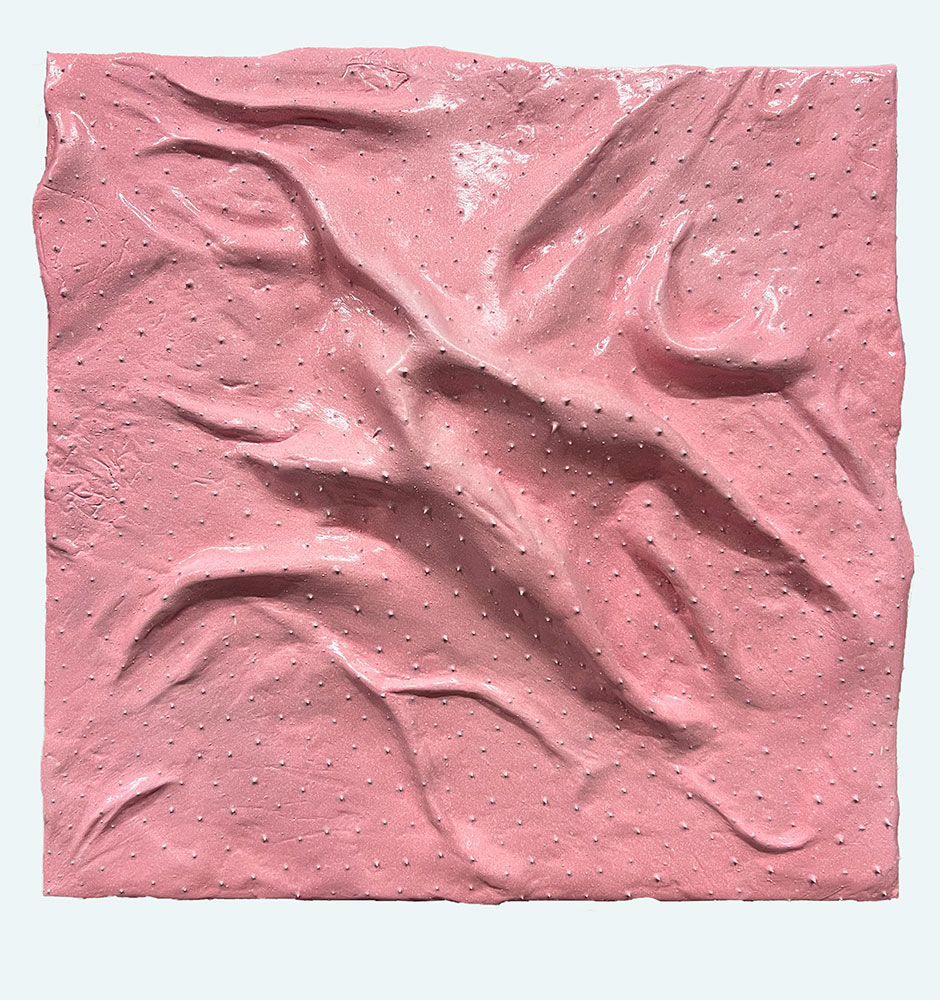
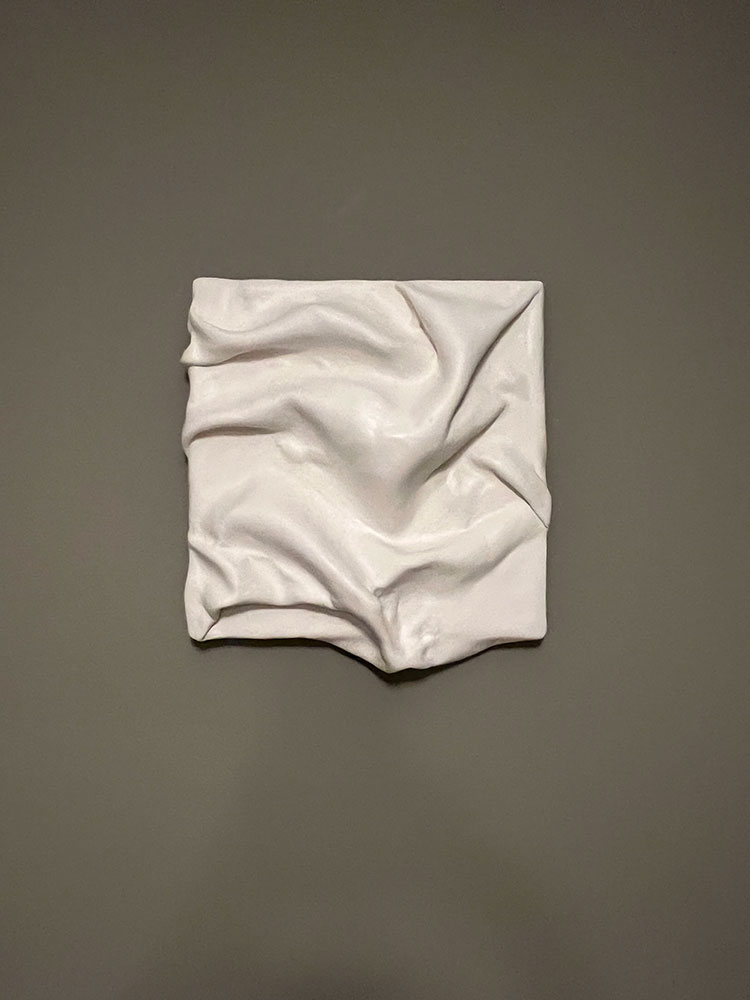
My practice is intuitive, sensual and a little feral. I am interested in works that communicate through the body as much as through the mind.
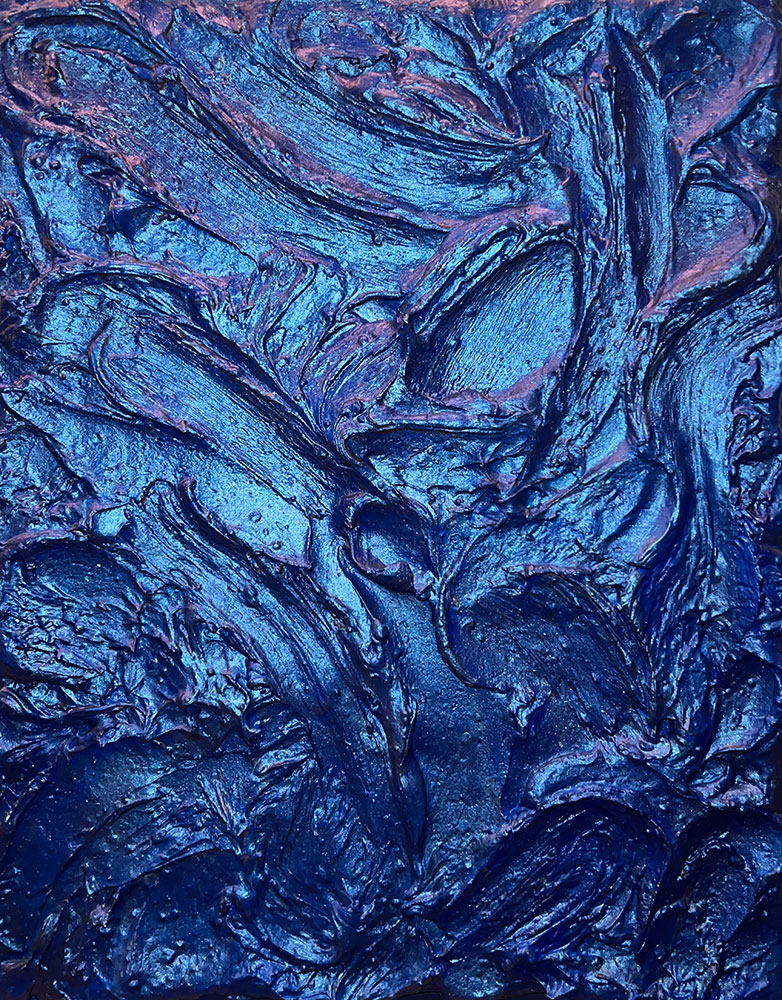
I often work with textures and materials that evoke physical reactions — surfaces you want to touch, objects that almost seem to have a smell or taste, images that linger somewhere between attraction and unease. I like when a viewer cannot immediately define what they are feeling but senses something shifting internally.
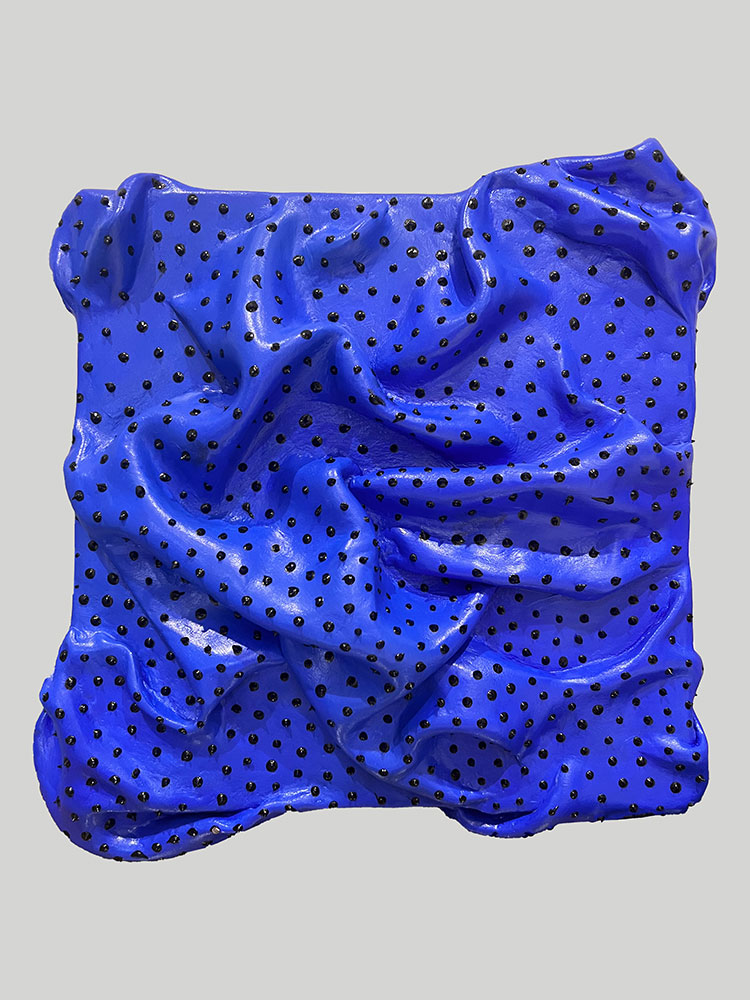
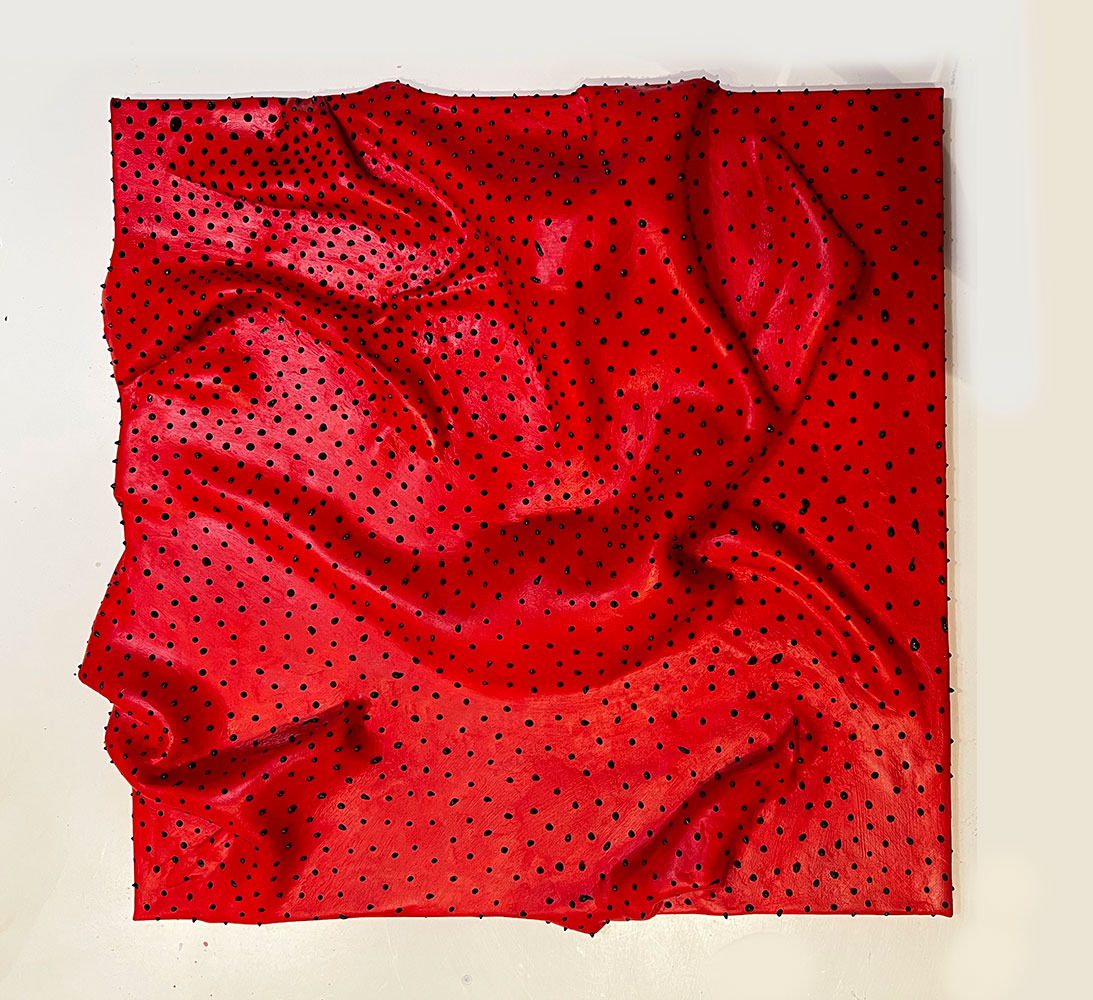
Color also plays an important role in my work. The dialogue between red and blue returns frequently — a kind of emotional polarity, tension between warmth and distance, blood and water, intimacy and detachment.
In many ways my works operate through dualities: softness and aggression, beauty and discomfort, control and instinct. They invite a slow encounter rather than an instant explanation.
What themes or ideas keep returning to your work, even when you don’t plan for them?
Certain ideas seem to find their way into my work regardless of my intentions. I often notice them only afterwards, once a piece is finished and I step back.
Duality appears again and again — emotional contradictions, opposing forces that exist simultaneously. I am drawn to subjects that evoke tactile responses, surfaces and forms that activate memory through the body.
There is also a recurring interest in sensory perception: how an image can suggest touch, temperature, smell or taste. These sensory echoes create a deeper connection between the viewer and the work, allowing the piece to exist not only visually but almost physically in the imagination.
Can you walk us through your process – from the first idea to a finished piece?
Usually the process begins with a rough idea — sometimes a visual fragment, sometimes a color combination or a vague emotional atmosphere. From there I determine the medium that feels most appropriate for that idea.
I start with sketches. At this stage the work begins to acquire a physical presence but it still remains fluid and open to change. Sketching helps me explore different directions while keeping the idea flexible.
Then the making begins. If the work is a painting, I sketch the composition on canvas and create an underpainting that establishes the general structure and mood. If it is a sculptural piece, I begin with a basic structural form — a kind of skeleton that will hold the work together.
As the process continues the piece slowly gains its character. Often it begins to move away from my original vision. I try not to resist that. Materials have their own logic, their own temperament, and I prefer to collaborate with them rather than force them into obedience.
When the piece reaches about eighty percent completion, it goes into what I jokingly call “art prison”. That means I put it away for a while — sometimes a few days, sometimes weeks. This distance protects the work
What are you currently working on, and are there any upcoming exhibitions or projects you’d like to share?
Right now I am focusing on expanding the visibility of my work and building a more consistent discipline around my online presence, documentation and the way my practice is communicated beyond the studio. For me this is not only about exposure, but also about creating a stronger framework around the work itself — making sure each project has a life before, during and after its physical presentation.
At the same time I am becoming increasingly interested in spatial formats — installations and projects that move beyond a single object and begin to shape an environment. I am drawn to situations where the viewer does not simply observe a work from a distance but enters it, moves through it and experiences it physically, almost sensorially. These formats open up new possibilities for tension, intimacy and atmosphere, which are very important to my practice.
How has your practice evolved over the years – what has changed, and what has stayed the same?
One of the biggest changes has been my relationship with perfectionism. My early training followed a very traditional academic approach where technical precision was heavily emphasized.
For a long time perfectionism became my worst enemy. Many ideas never left my sketchbooks or my studio because they did not match the ideal image I had in my mind. Some works were abandoned too early, others were destroyed in an attempt to make them “perfect”.
Over the years I learned something important: perfection often suffocates the life of a piece. Now I allow more freedom, more breathing space. I try to recognise the moment when a work needs rest rather than more control.
I also became more realistic about my skills and limitations, which surprisingly opened new creative possibilities. Constraints can become tools for invention when approached with curiosity instead of frustration.
In a strange way I feel like I became friends with my demons. They are still there, but now they participate in the process rather than sabotage it.
What advice would you give to emerging artists just starting out, looking back on your own journey?
Document everything. This is one of the most valuable habits you can develop.
Take photographs and videos of your process even when you feel the work is unfinished or unsuccessful. Record small voice notes when ideas appear. Write down fragments of thoughts. These traces of your process will become incredibly valuable later — for your portfolio, your archive, and sometimes for understanding how your ideas evolve.
Sharing work can feel intimidating, especially in the beginning. Creating a separate social media account under an alias can be a helpful first step if you feel uncomfortable showing work to people who know you personally.
Distance sometimes makes experimentation easier.
Feedback is also important. Honest reactions from viewers can help you refine your work and keep moving forward.
It is also worth learning some practical aspects of being an artist early on: how to ship artworks safely, how to prepare basic documentation, how to maintain a clean and clear portfolio.
A portfolio does not need to be complicated. It simply needs to present your work clearly, professionally and in a way that people can easily access.