
Draw slowly. Let the image reveal itself.
Born and based: Paris, France
@zoe.baer.art | www.zoebaer.com
INTERVIEW
How did you find your way into art – was there a specific moment or person that set you on this path?
I didn’t immediately consider myself an artist. For a long time, I was focused on masterpiece reproductions in oil painting, which was really my foundation and what I loved most.
Around the COVID period, I moved countries, and everything shifted a bit in my life. I started experimenting with different mediums without any real expectation. I had always been interested in drawing, but I didn’t feel particularly strong in it. Then I discovered charcoal. The contrast, the way it handles light, and the precision it demands immediately drew me in. It requires full attention at every stage, which was exactly what I was looking for. I didn’t plan to focus on it, but I naturally fell into it, and it became central to my practice.
How would you describe your artistic practice to someone encountering your work for the first time?
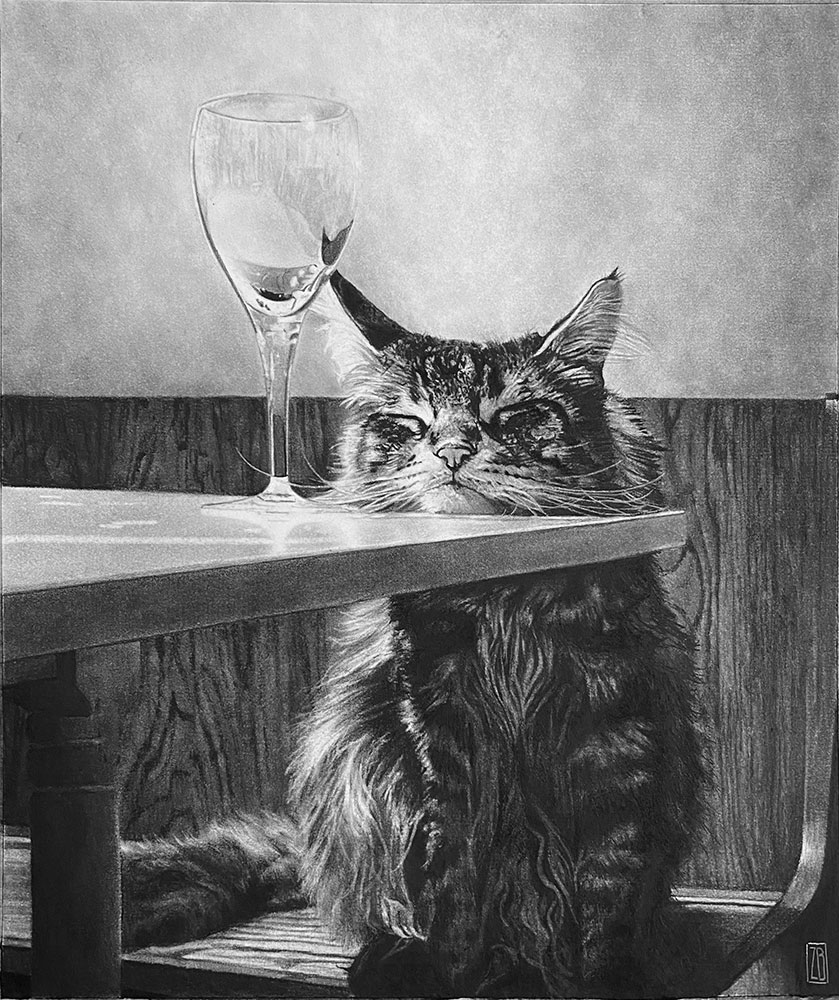
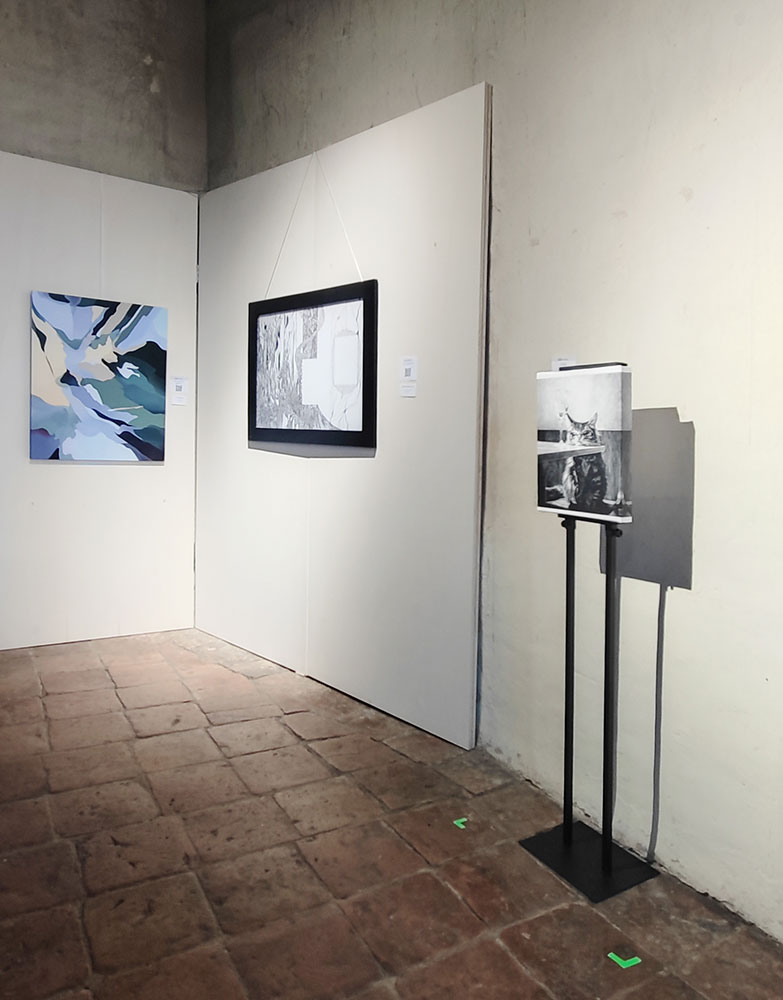
My work is centred around capturing moments of presence. I’m interested in quiet states where people or animals are not performing, not thinking ahead or looking back, but simply existing. The drawings are often very detailed, but they are not about realism for its own sake. They are about holding a moment still. Charcoal allows me to focus on light, shadow, and subtle expression without distraction.
I try to create images that ask the viewer to slow down and stay with them for a moment, rather than quickly consuming them.
What themes or ideas keep returning to your work, even when you don’t plan for them?
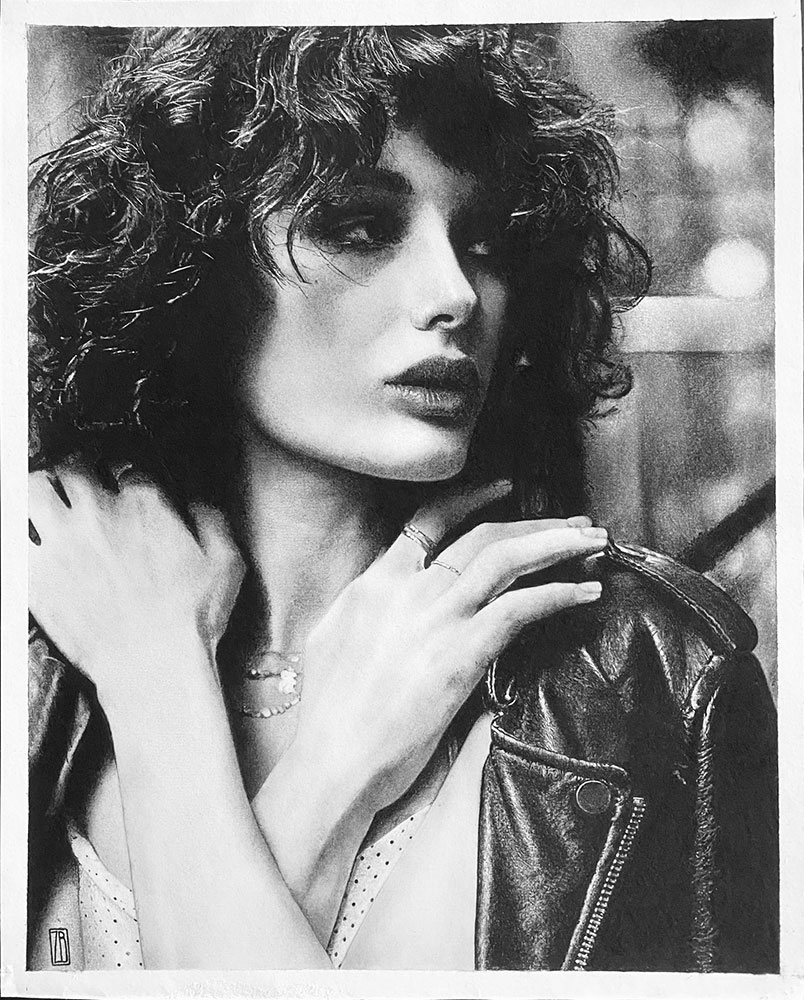
The main theme is presence. I’m drawn to moments of stillness and intimacy, whether with animals, children, or adults. What interests me is when a subject is simply “there,” not performing or constructing an identity. In those moments, there is no social role, no past, no future. Just a form of authenticity. That’s what I try to capture.
It’s also a way of resisting the constant noise and performance we’re surrounded by today. These quiet moments allow for a kind of reset, where something more honest can appear.
Can you walk us through your process – from the first idea to a finished piece?
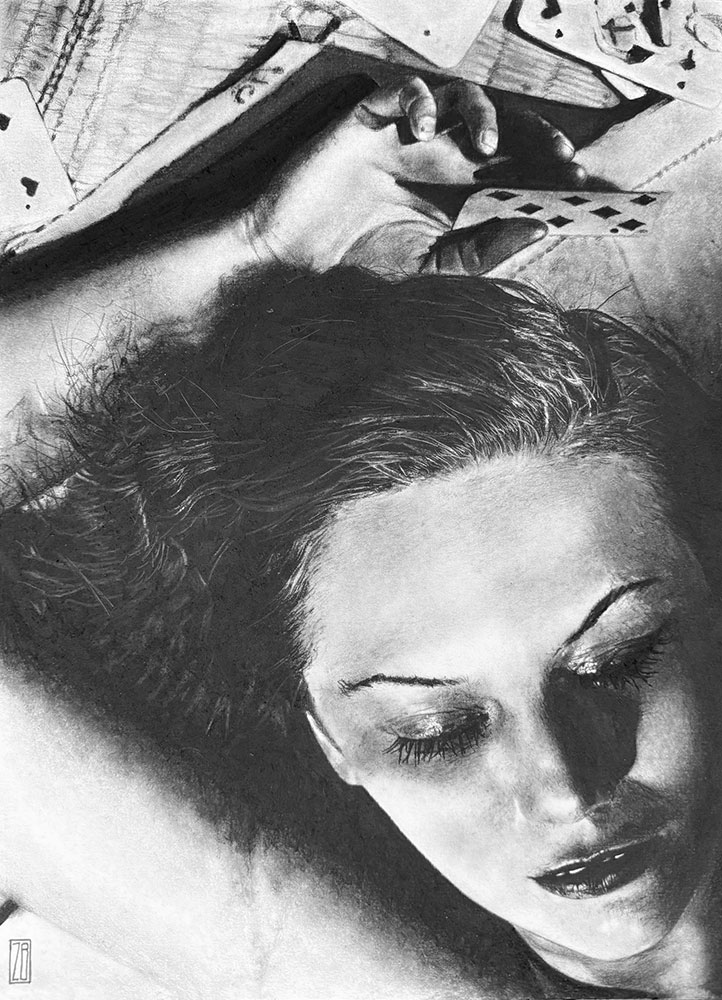
I usually start from photographic material, either my own or from photographers who are able to capture the kind of presence I’m looking for. From there, I don’t reproduce the image exactly. As I work, I adjust elements, shift details, and sometimes combine different references. The drawing evolves gradually, layer by layer. Charcoal requires patience and precision, so the process is quite slow and focused. It’s less about following a fixed plan and more about responding to what emerges as I work.
What are you currently working on, and are there any upcoming exhibitions or projects you’d like to share?
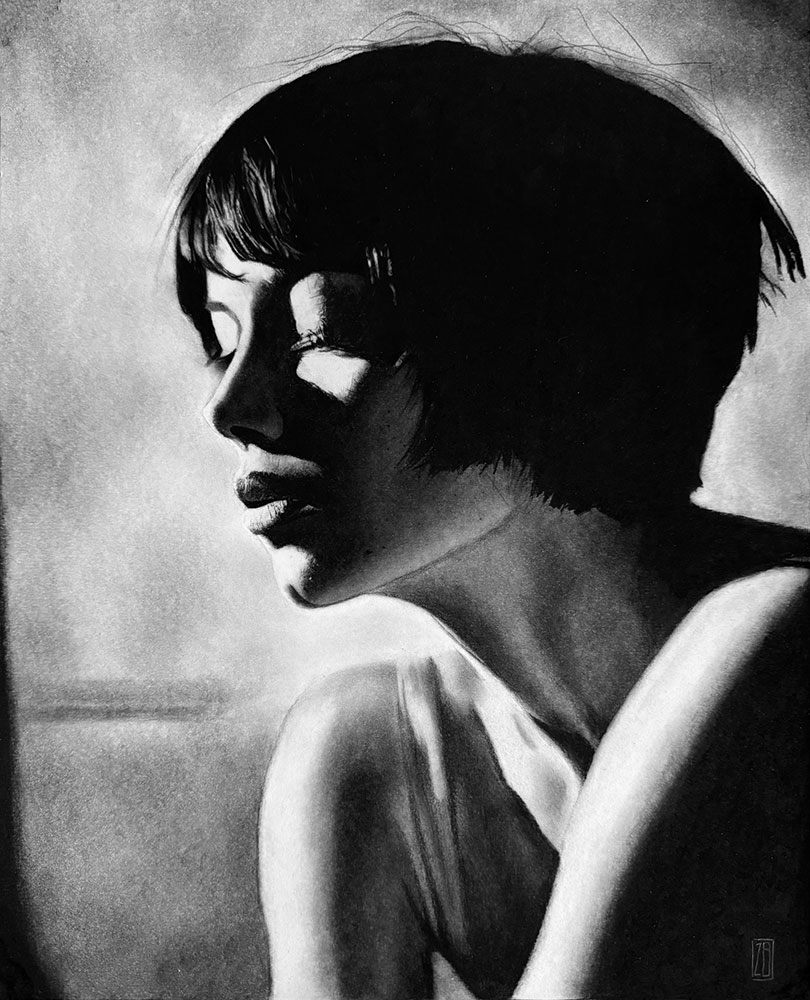
I recently completed a drawing of a child, where I explored wood textures more closely, extending my attention to surface and material. I am currently focusing on a series of commissions.
At the same time, I am preparing my first solo exhibition, scheduled this spring with a US-based gallery. As it is still in development, I prefer to let the work unfold before speaking about it in detail.
In parallel, I have founded an artistic NGO in Paris, The Red Chameleon Studio. It is conceived as a space that shifts the relationship to art from observation to practice. Red Chameleon Studio will offer private drawing and painting sessions for short-term visitors and for those seeking a more direct engagement with making. The launch is planned for this year.
How has your practice evolved over the years – what has changed, and what has stayed the same?
The core intention has stayed the same, focusing on presence and stillness. What has evolved is the complexity of the work. I used to focus mostly on faces, both human and animal. Now I’m more interested in integrating textures: wood, fabric, skin, materials like lace or leather. Working on texture brings me back to something very grounded and real. In a world increasingly dominated by screens and artificial images, texture reconnects the work to physical reality and something tangible.
What advice would you give to emerging artists just starting out, looking back on your own journey?
Begin with the hand. Choose a medium and stay with it long enough to understand its resistance, its limits, and its possibilities.
Spend time with existing works. Reproduce them, interpret them, and learn how images are constructed. This is not imitation, but a way of entering a conversation that began long before you.
Work with discipline. Curiosity matters, but so does rigor.
And remain attentive to your own voice as it forms. It does not need to be forced, only sustained with clarity and commitment.
www.zoebaer.com