
Annalisa Middleton – Embroidered Mythologies and the Memory of Civilisation
@annalisaluciana | annalisamiddleton.com
Author: Anna Ponomarenko
Date: May 11, 2026
Curated Artist Spotlight
Excavating Through Stitch
In the work of London-based textile artist Annalisa Middleton, embroidery becomes more than ornament or technique. It becomes a method of excavation – and something closer to a spiritual practice.
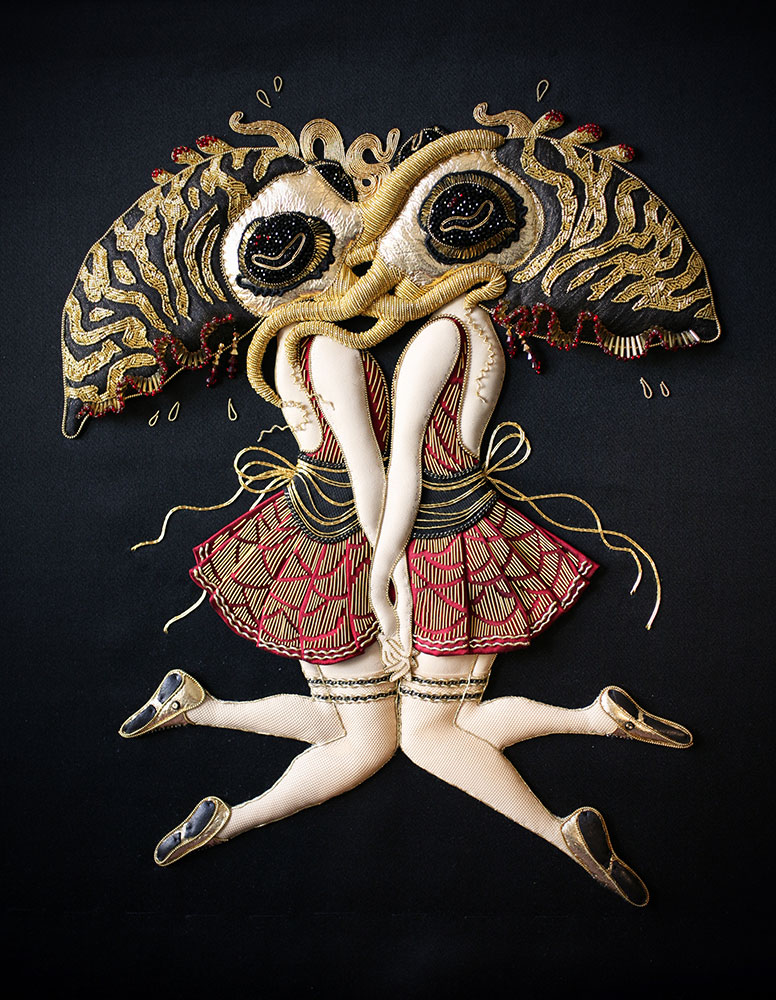
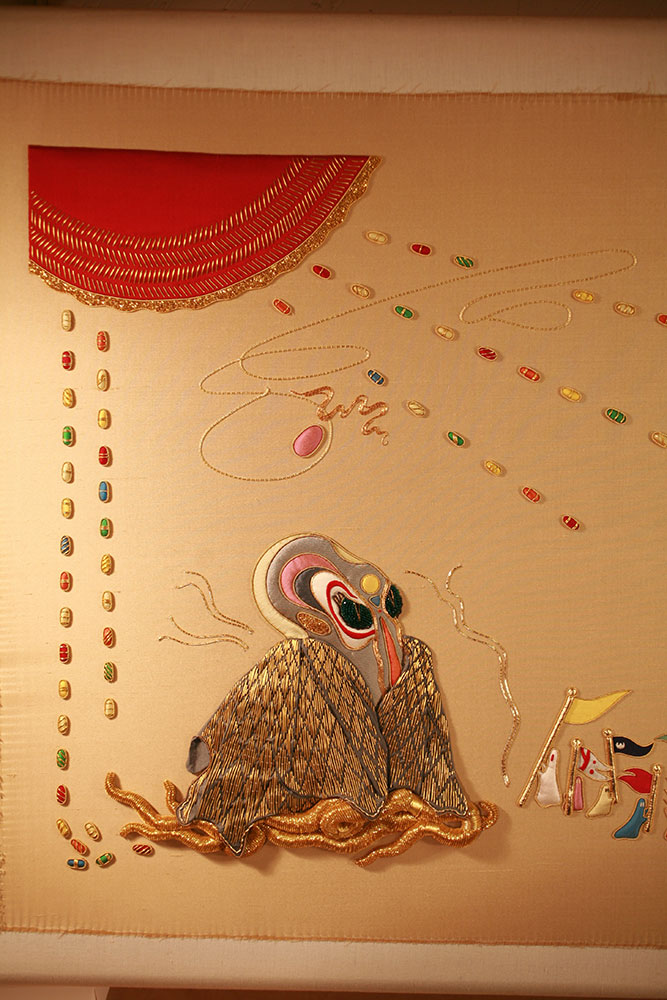
Working with gold wire, coloured silks and the ancient language of Goldwork embroidery, Middleton creates intricate textile compositions inhabited by coiling creatures, ceremonial vessels and anthropomorphic figures suspended somewhere between mythology and archaeology. Her works appear less like illustrations of stories than fragments recovered from an unknown civilisation – remnants of rituals, symbols and belief systems whose meanings remain partially obscured.
Myth, Consciousness and Early Civilisation
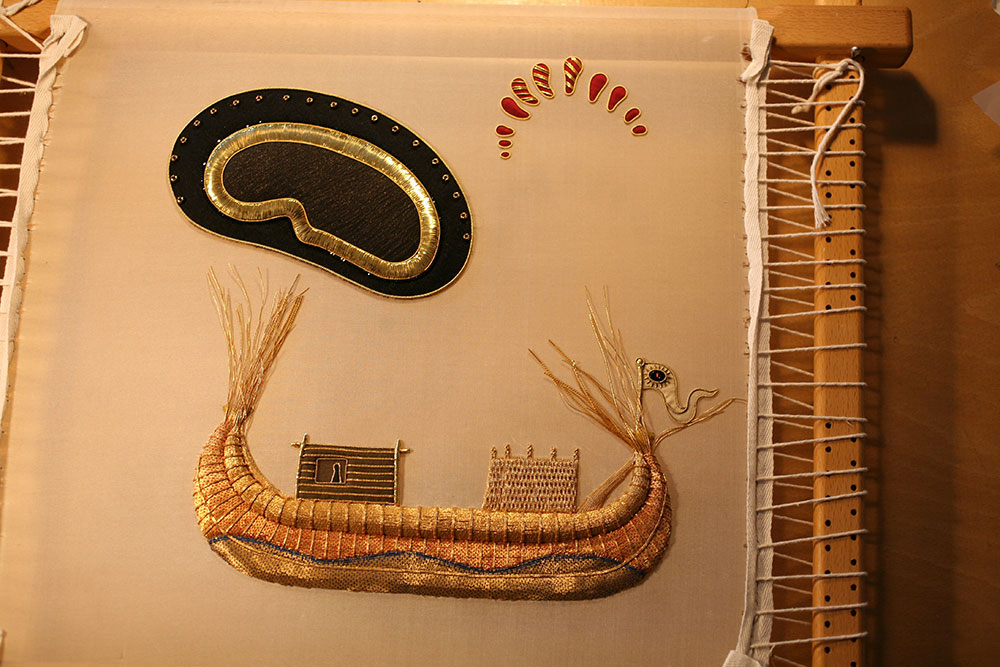
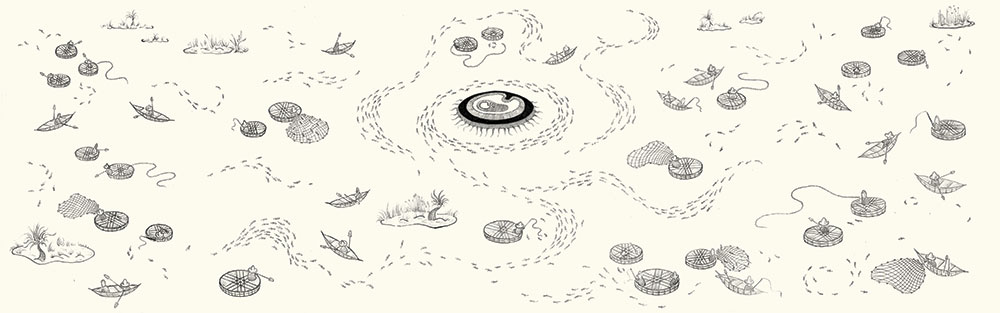
Her current body of work draws inspiration from the fertile wetlands between the Euphrates and Tigris rivers – the landscape in which the earliest recognised human civilisation, the Sumerian empire, took form around 6000 BCE. Through embroidered allegories, Middleton reflects on the emergence of consciousness alongside craft: how human beings began shaping both their environments and their understanding of existence through the making of objects.
The series follows what she calls the Traveller – life forms that move between the cellular and the cosmic, aquatic and planetary, ancient and imagined. Their journey loosely traces the paradigm shift from hunter-gatherer existence to organised agricultural society, using the Mesopotamian landscape as both historical ground and visual metaphor. The flat plains, flood-controlled rivers and abundant wetlands of ancient Sumer become fertile terrain for a mythology that is simultaneously researched and dreamed.
Rather than reconstructing history literally, Middleton approaches it intuitively. Gold threads curve like waterways or nervous systems. Figures dissolve into hybrid beings. Ornament behaves as both decoration and code.
The Object as Vessel
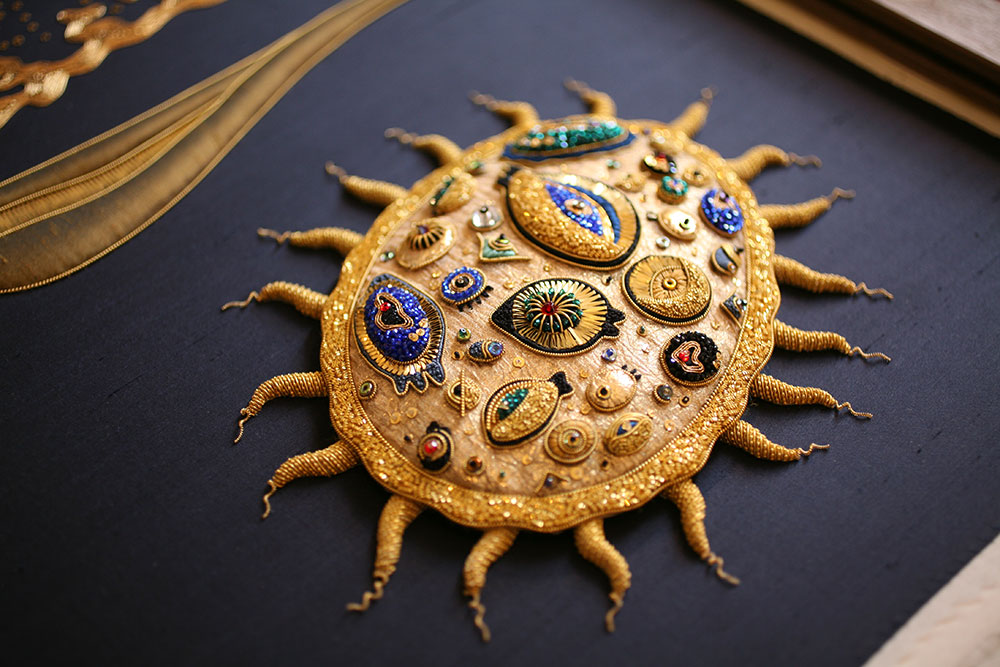
Many of the works begin in a state that Middleton describes as close to automatic drawing – the hand moving before the mind has fully formed an intention, allowing subconscious associations and symbolic forms to surface through the act of making itself. The work Extasis, rendered in gold wires and crystal beads, emerged from this state. She recommends viewing it in dim half-light, like a Tibetan Thangka mandala – as a contemplative object rather than an image to be consumed.
“There is a seam running through my interior landscape like a rich ore of precious metal,” she writes.
“The work is about uncovering something already in existence – something elemental in the nature of consciousness.”
This is not metaphor alone. Middleton draws on the Greek concept of Nous – the spiritual faculty through which we access universal wisdom – and on the ideas of artist and occultist Austin Osman Spare, who believed that the established thought complexes of the mind are alive, and that giving them form through image-making allows us to contact and develop them. For Middleton, an embroidered object becomes a vessel in the fullest sense: charged through the process of making, capable of holding and transmitting accumulated meaning.
The labour-intensive nature of Goldwork – historically used for ecclesiastical objects, ceremonial garments and sacred spaces – reinforces this intention. These were always materials made to achieve a worshipful state of mind. Middleton continues that tradition with full awareness of what she is inheriting.
Material, Craft and Contemporary Practice
There is an important tension in Middleton’s work between fragility and permanence. Textile, often perceived as soft or domestic, becomes monumental through the sculptural density of metal threads and meticulous construction. Her compositions carry the visual richness of illuminated manuscripts or ceremonial relics while remaining psychologically intimate and unmistakably contemporary.
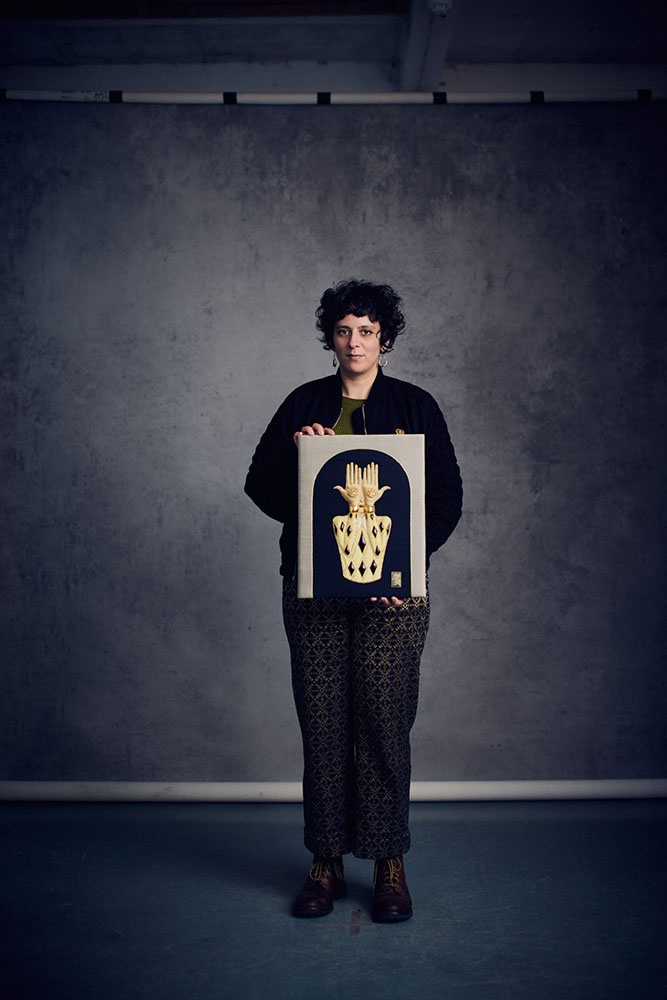
Middleton trained as a costumier and couturier before moving further into fine art – a background that continues to inform her distinctive technical language. Over the past decade she has developed a highly individual approach to Goldwork, shaped through collaborations with artists, museums and textile studios including Watts & Co. London and the Frederick Leighton Museum.
In 2016 she won the Hand & Lock Prize for Fashion and received an award for excellence in Goldwork from the Worshipful Company of Gold and Silver Wyre Drawers. She later participated in the group exhibition Drawn and Formed at the Goldsmiths’ Centre.
Writing, Ritual and Continuity
Alongside textiles, writing forms an essential part of Middleton’s practice. Influenced by Hermeticism and other spiritual traditions, she writes poetry and philosophical texts that function as extensions of the embroidered worlds she constructs. Together, image and language become part of a larger myth-making process – one that attempts to reconnect material culture with memory, ritual and human imagination.
What emerges through her work is not nostalgia for ancient civilisation, but a meditation on continuity. Her embroidered forms suggest that myth is not something fixed in the past, but an active process still unfolding through contemporary acts of making.
Her work is a reminder that craft, when carried with intention, is never merely decorative. It is a form of thinking. A way of holding something sacred long enough to pass it forward.