Ian Berry:
Finding Nature Inside the City
@ianberry.art | www.ianberry.org
Author: Anna Ponomarenko
Date: June 29, 2026
Curated Artist Spotlight
Beyond the Material
For more than twenty years, Ian Berry has worked almost exclusively with discarded denim. It is the first thing people notice about his work, and often the last thing they remember.
Yet the material itself is no longer the subject.
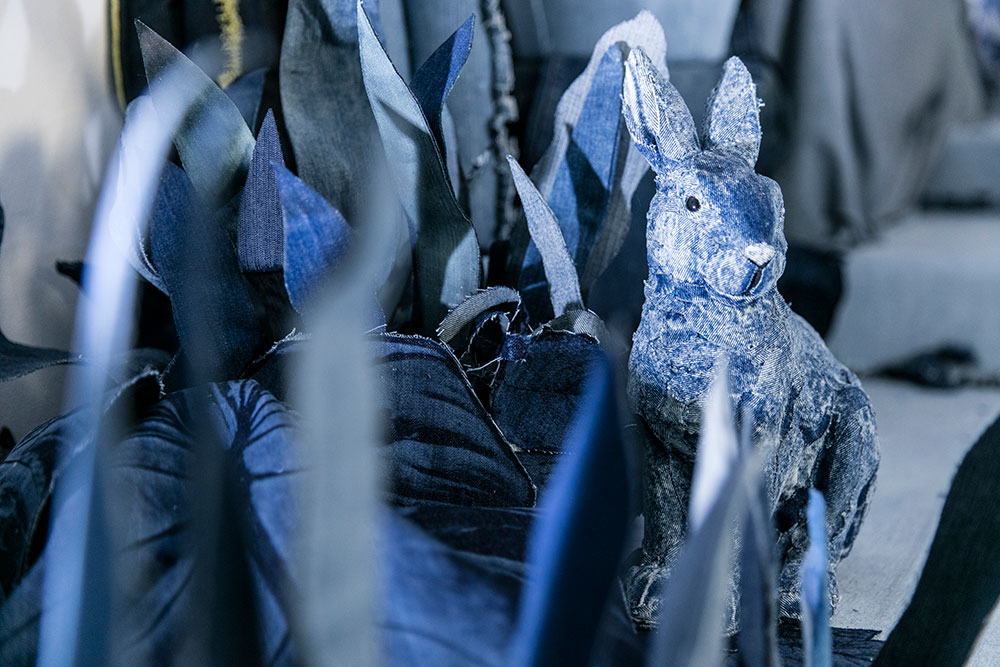
Denim has become Berry’s visual language – his equivalent of paint. The different washes, fades and worn textures allow him to construct surprisingly complex tonal worlds where architecture, water, vegetation and memory emerge from a fabric usually associated with everyday clothing.
His work asks viewers to stop seeing jeans as clothing and begin seeing them as landscape.
Secret Garden
Berry’s ongoing Secret Garden installation may be the clearest expression of that shift.
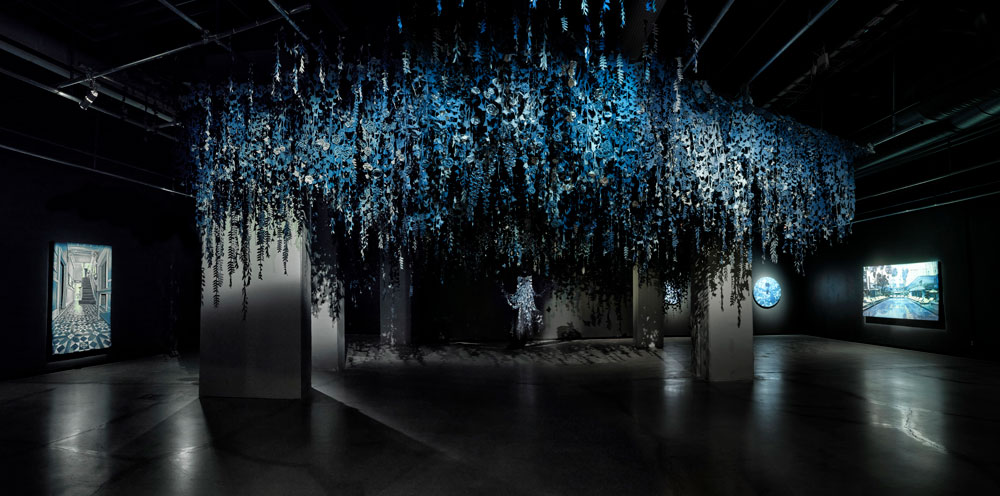
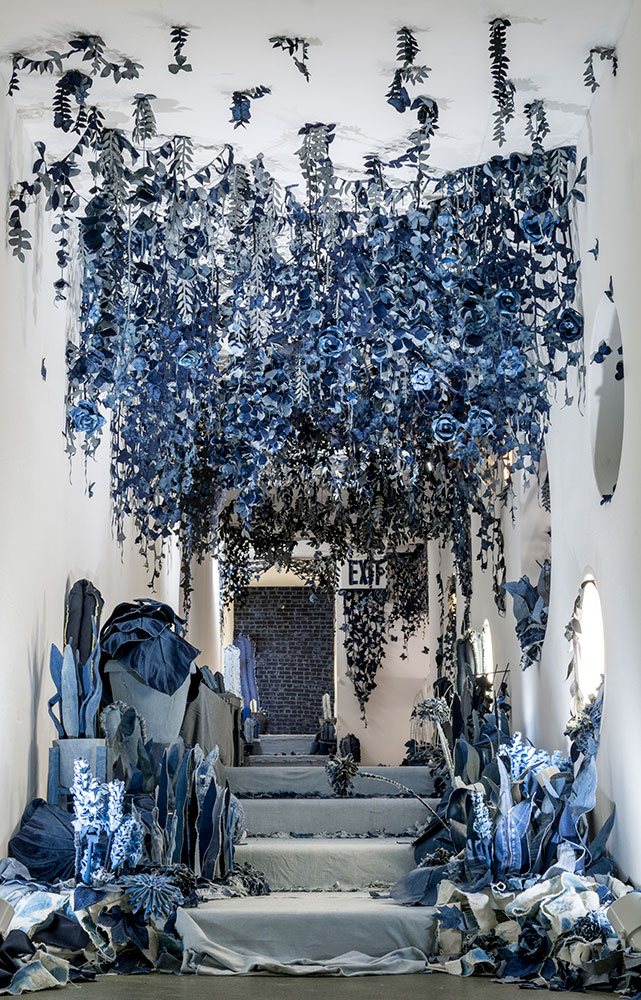
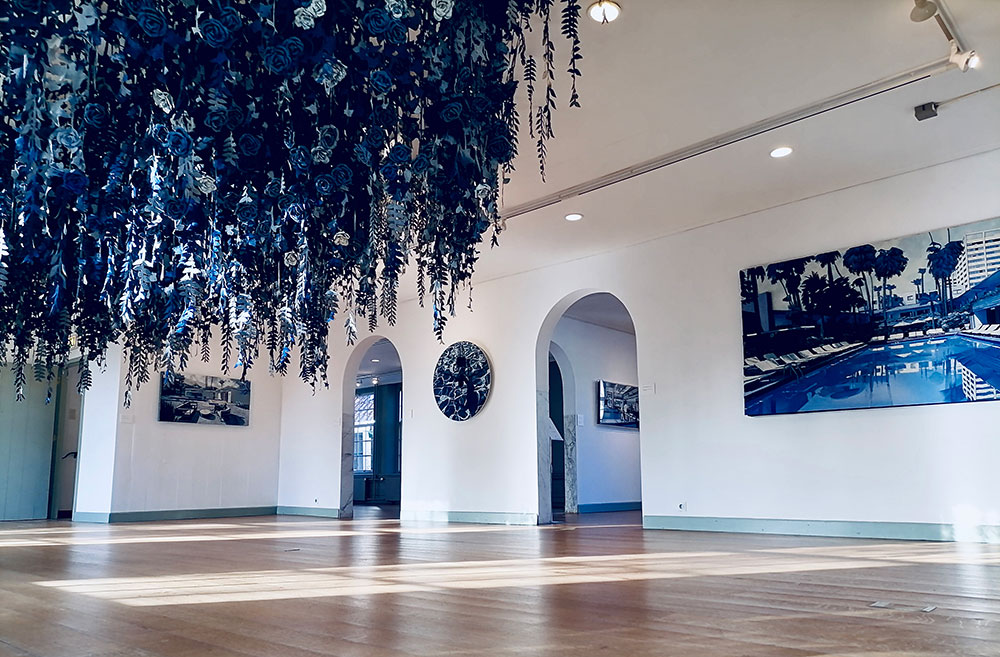
Built entirely from recycled denim, the immersive environment transforms galleries and museums into spaces where vines descend from ceilings, koi ponds shimmer beneath visitors’ feet and flowers bloom in countless shades of indigo.
The installation first appeared at the Children’s Museum of the Arts in New York before evolving through a series of site-specific versions presented across Europe, the United States and South America. Each iteration responds to its location while retaining the same central question:
What happens when nature is reconstructed from one of the world’s most recognisable industrial fabrics?
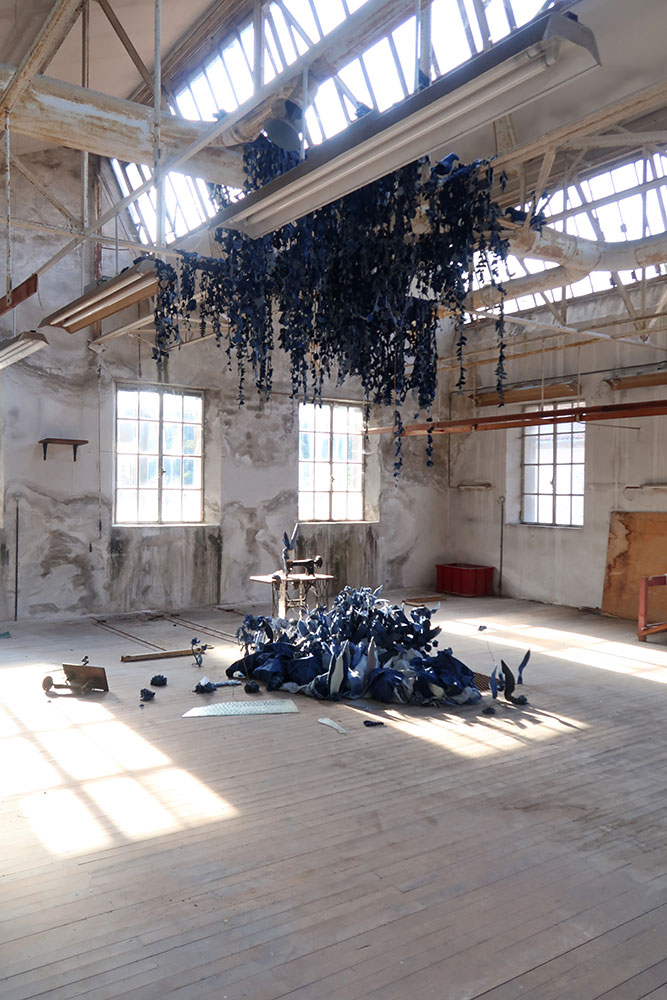
Rather than treating sustainability as a slogan, Berry uses transformation itself as his artistic method. Cotton becomes denim. Denim becomes sculpture. Worn garments become gardens.
The cycle quietly continues.
Between Wonder and Reflection
Although Secret Garden often evokes a childlike sense of discovery, the work never feels naïve.
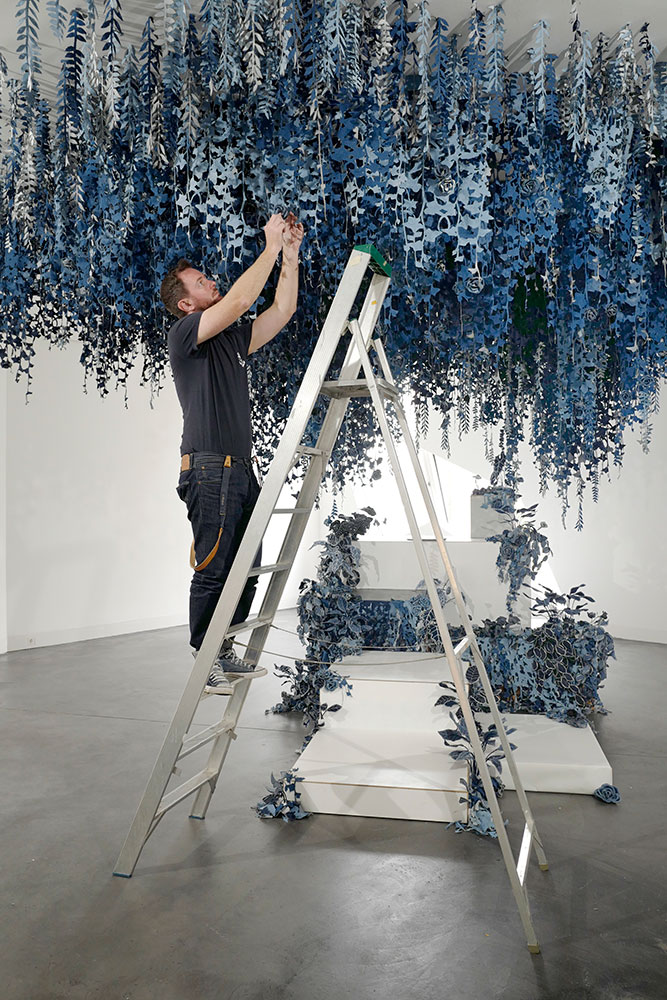
Visitors enter spaces filled with suspended wisteria, climbing vines, ponds, flowers and carefully layered foliage, only to gradually realise that every petal, every leaf and every reflection has been cut, assembled and shaped from discarded jeans.
The illusion slows perception.
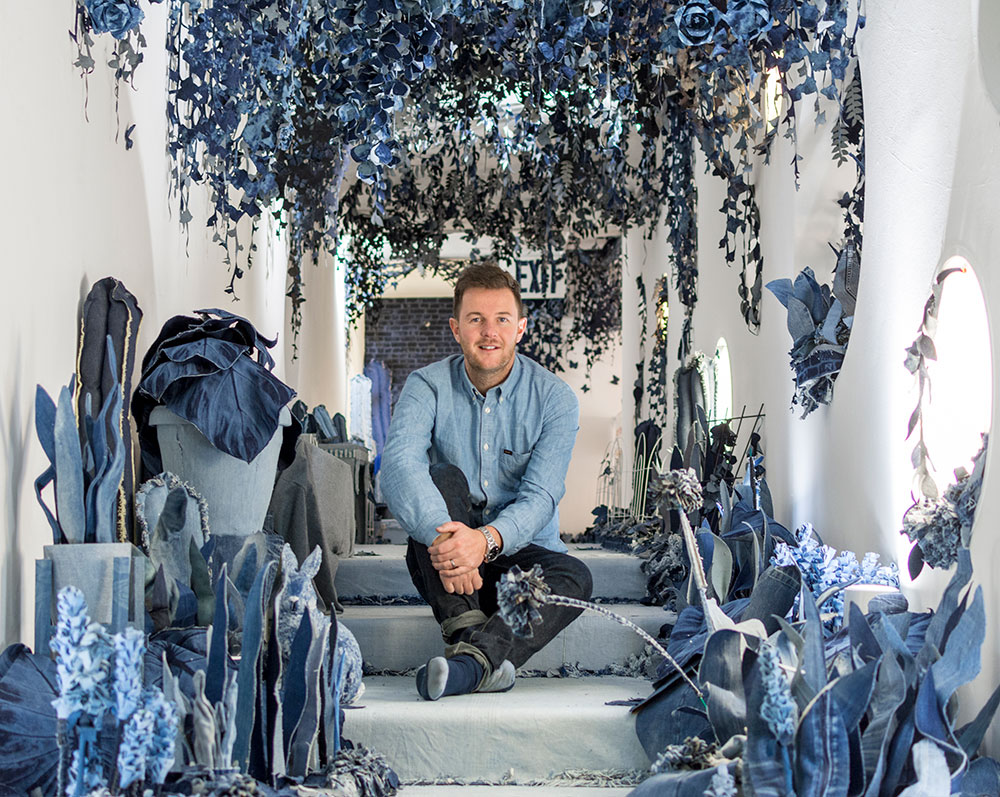
Instead of immediately recognising the material, viewers first experience atmosphere. Recognition arrives later, turning surprise into reflection.
Berry has spoken about wanting children growing up in cities to discover hidden gardens tucked between buildings, but the installation also speaks to adults. It suggests that wonder is not something we lose with age. Sometimes it simply needs a different doorway.
Material as Memory
There is another reason denim continues to occupy the centre of Berry’s practice.
Unlike traditional art materials, denim already carries history.
Every faded seam, worn knee and softened surface belongs to a previous life before entering the studio. Berry rarely asks viewers to think about individual owners, but that accumulated human presence remains embedded within the work.
His gardens therefore become more than botanical spaces.
They are landscapes assembled from traces of everyday lives.
A Practice in Constant Transformation
Over the past two decades Berry has developed one of the most recognisable material practices in contemporary art.
His work has been exhibited internationally, from museums in Sweden, Germany and the Netherlands to installations in New York, San Francisco, London and Chile. In 2025, The Secrets are in the Garden opened at the Presidential National Library in Ankara, where the installation expanded once again in dialogue with its architectural setting.
Alongside large-scale immersive environments, Berry continues to produce portraits, urban landscapes and installations that explore memory, surveillance, community and the changing relationship between people and place.
More Than Denim
Perhaps the greatest achievement of Ian Berry’s work is that, after a few minutes, viewers stop thinking about denim altogether.
What remains is atmosphere.
A quiet garden growing inside a museum.
A familiar material transformed into something unexpectedly alive.
And a reminder that the way we see the world often depends less on discovering new materials than on learning to look differently.