
Anastazia Jackson is a French fine art photographer from Normandy, now based near Boston. Trained in fine arts, makeup, hairstyling and photography, she creates historical and theatrical portraits inspired by French history, sacred imagery and forgotten figures.
Critical Review
Anastazia Jackson does not reconstruct history so much as re-stage the emotional worlds it leaves behind. Her portraits exist between theatre, devotional painting and historical fiction, where kings, plague figures, saints and clowns occupy the same visual space without hierarchy. Rather than illustrating specific events, Jackson builds a symbolic archive in which forgotten lives become as culturally significant as celebrated ones.
What distinguishes the practice is its material coherence. Every costume, headdress and prop is constructed by the artist from discarded objects, transforming everyday materials into convincing historical forms. This transformation is more than technical craftsmanship; it reflects the artist’s broader intention to restore dignity to overlooked people and neglected histories.
Through controlled light, painterly post-production and carefully staged compositions, Jackson creates images that feel suspended outside chronological time. La Cour des Miracles is not a reconstruction of the past, but a meditation on memory, visibility and the fragile boundary between history and myth.
Anna Ponomarenko, Editor
INTERVIEW
“La Cour des Miracles” brings together figures who rarely share the same visual space – saints, plague characters, clowns, kings. What determines which characters enter the series, and is there a figure you have imagined but not yet been able to realise?
“La Cour des Miracles” is inspired by the hidden and fragile world of old Paris, where poverty, illness, plague, beggars, rejected people and street performers could exist in the shadows of society. I imagine this series as a secret theatrical world beneath the official beauty of Paris, where the streets were marked by misery, disease and survival, while the royal world represented luxury, power and abundance.
What interests me is the strong contrast between these two universes: on one side, illness, death, poverty and marginal lives; on the other, royalty, beauty, ceremony and excess.
Yet these worlds were not completely separate. Theatre, clowns, Pierrot figures, music and art created a bridge between them. Before modern entertainment, performance was a way to escape fear, sadness and death, and to keep imagination alive.
The characters enter the series because they all belong to this emotional contrast. Saints, kings, plague figures, clowns and forgotten souls meet in the same visual space, as if art could transform suffering into poetry and give dignity back to those history left behind.
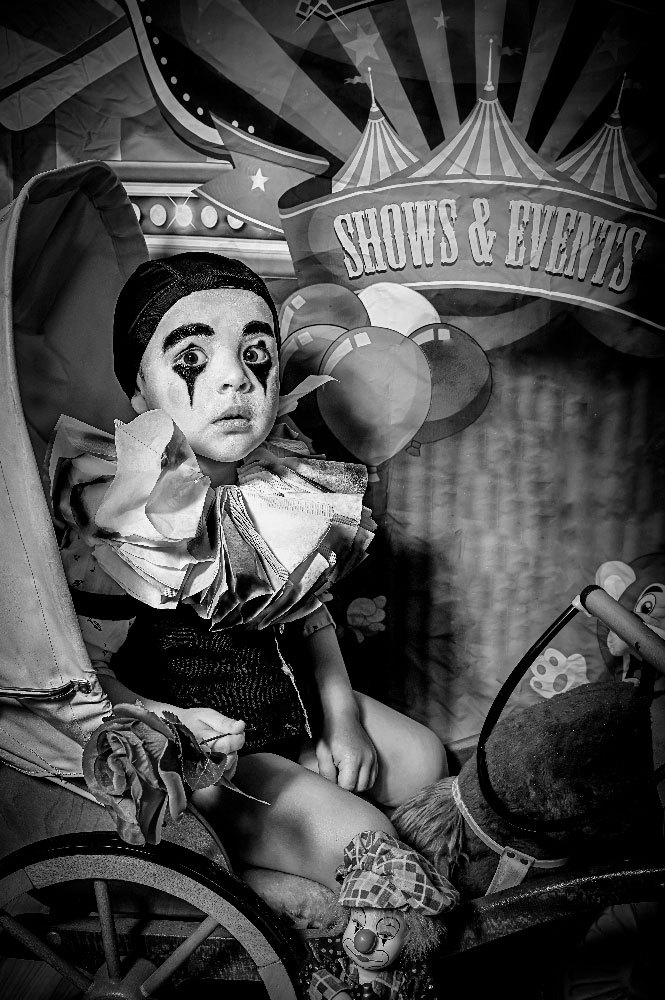
You build each costume yourself from recycled and repurposed materials – coffee filters, lampshades, old clocks. At what point in the process does a material stop being an object and start becoming a character?
For me, the image often exists before the work is created. It appears in my mind like a vision from another time, as if it came from an ancient memory, a forgotten era, or the echo of a past life. I do not always feel that I invent these images; sometimes I feel that they are transmitted to me, and that my role is to bring them into the visible world.
Some visions stay inside me for months before I can finally create them. The portraits inspired by Molière, Mozart and Shakespeare remained in my mind for almost three months. I could already see the characters and the way simple toilet paper rolls could become theatrical and historical headdresses.
When I see an object, I often know immediately what it can become. I no longer see a coffee filter, a lampshade, cardboard or an old clock only for its ordinary use. I see a collar, a crown, a sacred symbol, or the beginning of a character. A material stops being an object when it begins to carry a memory and becomes part of a living, poetic figure.
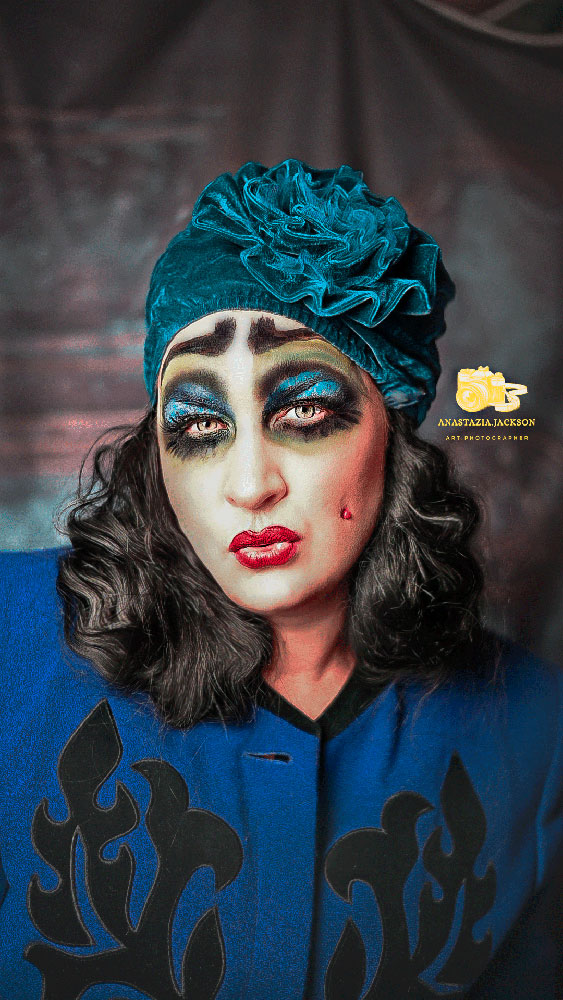
Your practice moves through several distinct phases: concept, costume construction, makeup, photography, and then hours of digital post-production. Where does the image actually become what it is – is there a moment when you know the character has arrived?
For me, the character already exists before the photograph is taken. The decisive moment happens when the artistic headdress, the makeup, the costume, the posture and the staging finally come together. At that moment, the person in front of me is no longer only a model or a child; the character has arrived.
The photograph then becomes the way to immortalize this apparition. It captures a presence that already exists in the room, almost like a figure from another time suddenly becoming visible.
After that, digital post-production allows me to complete the transformation. I do not see this stage as simply editing a photo. It is the moment when I can turn a simple image into a fine art piece, closer to an old painting or a historical portrait. Through light, texture, atmosphere, color and details, I bring the final soul of the image to life. The work becomes complete when the photograph no longer feels like a modern picture, but like a poetic memory from another century.
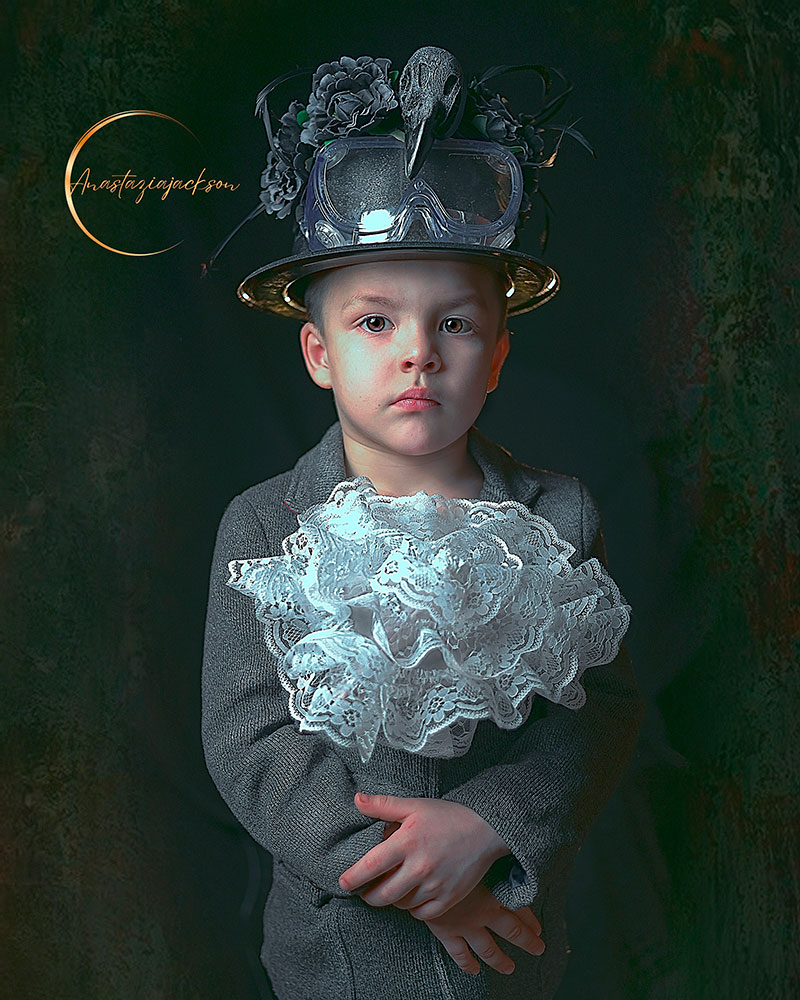
“La Cour des Miracles” follows “Versailles Reimagined,” yet moves from the court into the street – from power toward the margins. What shifted in your thinking between those two series, and what does that movement say about where your work is going?
My work tries to retrace fragments of French history through portraits. “Versailles Reimagined” was connected to royalty, ceremony, luxury and the visual power of the court. But before Versailles, before Louis XIV and the splendor of royal life, there was another Paris: a darker medieval Paris, marked by poverty, illness, hunger, death and hidden lives.
“La Cour des Miracles” allows me to bring this forgotten world into the light. It evokes the margins of society, where beggars, the poor, the sick, religious figures, performers, clowns and rejected souls could exist together. I wanted to move from the palace to the street because French history is not only made of kings, queens and abundance. It is also made of invisible people, suffering bodies, faith, theatre and survival.
At that time, religion, sacred imagery, theatre and art were among the only lights people could hold onto in the face of disease, poverty and death. For me, faith, Pierrot figures, clowns and art become the bridge between misery and beauty, darkness and human dignity.
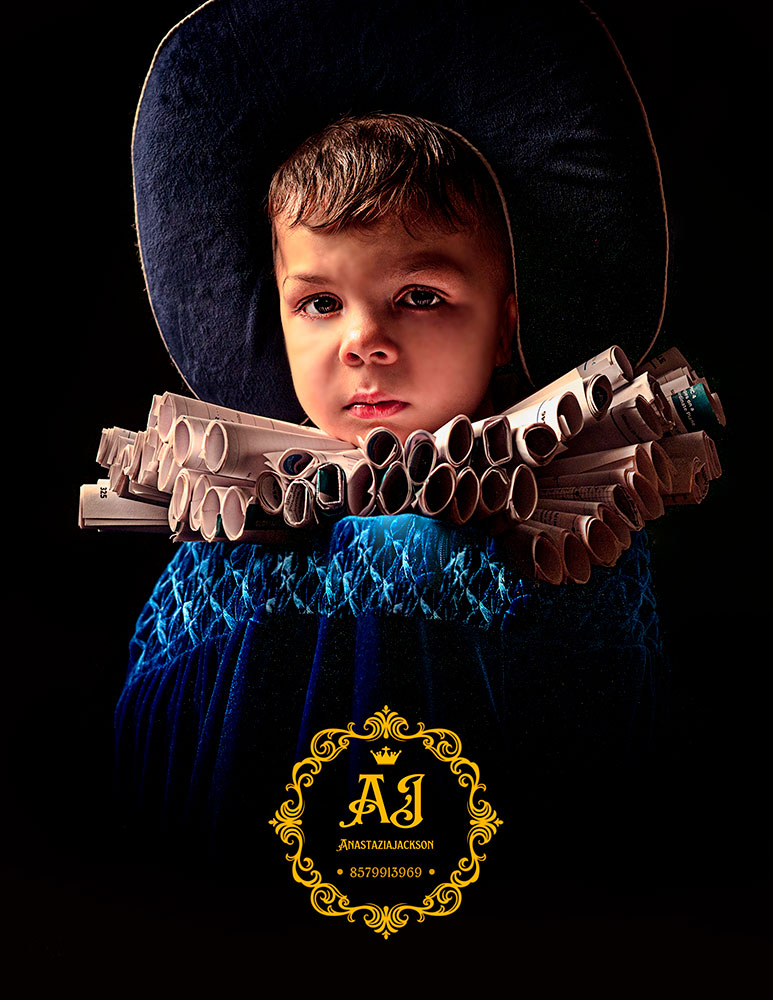
You describe your aim as showing that beauty can exist in darkness, illness, and imperfection. The clown and the plague figure carry that equally with the king. How do you prevent the darker figures from becoming spectacle – how do you give them dignity rather than drama?
I try to prevent darker figures from becoming only a spectacle by giving them humanity before anything else. I do not want illness, poverty, sadness or imperfection to become decoration or drama. I want the viewer to feel that there is a soul behind each face.
The depth of the gaze is very important in my work, as well as the light, which I try to make pictorial, soft and timeless, close to an old religious or historical portrait. Through staging, costume, makeup, posture and atmosphere, I try to give each character beauty and dignity.
Through my artistic work, I feel that I can make these forgotten figures live again. French history does not stop with royalty. Every person has a place in the world: an artist, a musician, a monk, a noble, a king, but also a beggar, a vagabond or a clown. Each human being carries an ultimate importance in society. For me, the plague figure or the rejected soul is not less important than a king. My goal is not to create drama, but to transform darkness into poetry, memory and human dignity.
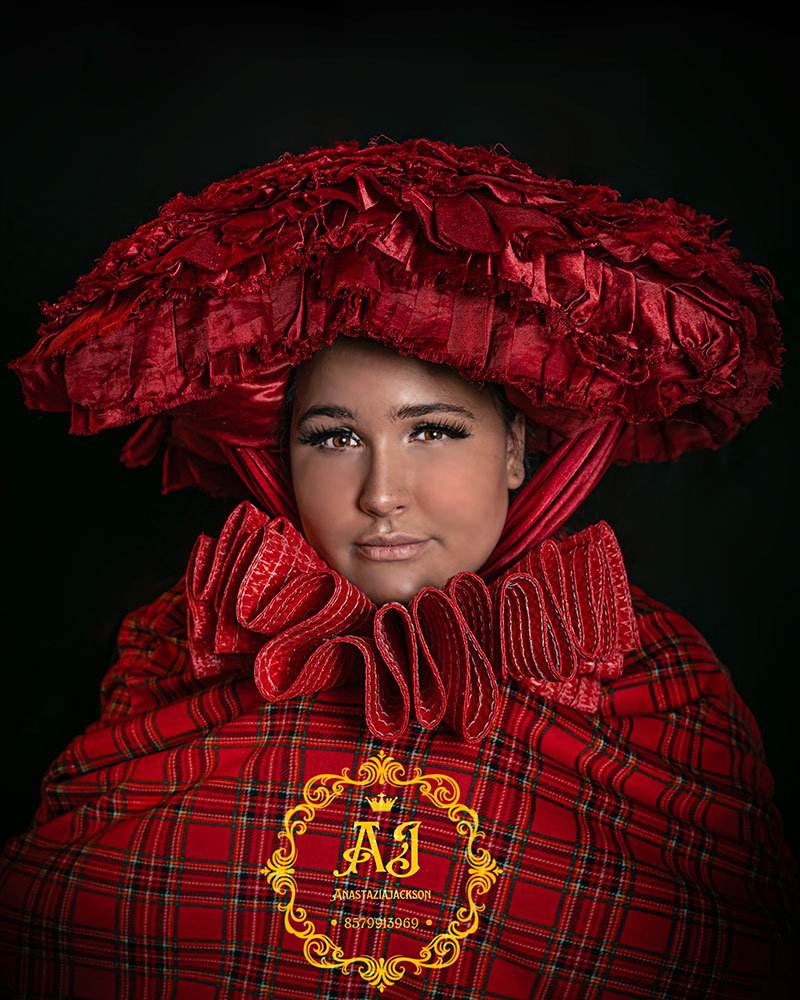
You trained at the École des Beaux-Arts de Caen and also professionally in makeup and hairstyling. Most fine art photographers work with a team. You do everything alone. What does that total control over the image give you that collaboration could not?
This total control gives me everything, because it allows me to recreate the image that already exists in my mind with complete fidelity. I can build the artistic headdresses, create period-inspired makeup, transform clothing and objects, design the atmosphere, direct the pose and finally photograph the character exactly as I imagined it.
My background helps me to be self-sufficient. At the École des Beaux-Arts de Caen, I first learned drawing, composition and visual construction. Later, through my training in aesthetics, professional makeup and hairstyling, I developed a very manual and precise approach.
My photography training then gave me the ability to immortalize these creations through portraiture.
I often reuse curtains, old clothes, children’s costumes or simple materials. For my Napoleon portrait, I transformed one of my children’s pirate hats by turning it into the shape of Napoleon Bonaparte’s hat. I drew and added the revolutionary emblem by hand, and I also created paper epaulettes that I attached to a baroque jacket. Working alone allows me to stage everything from beginning to end, in order to bring the character back to life.
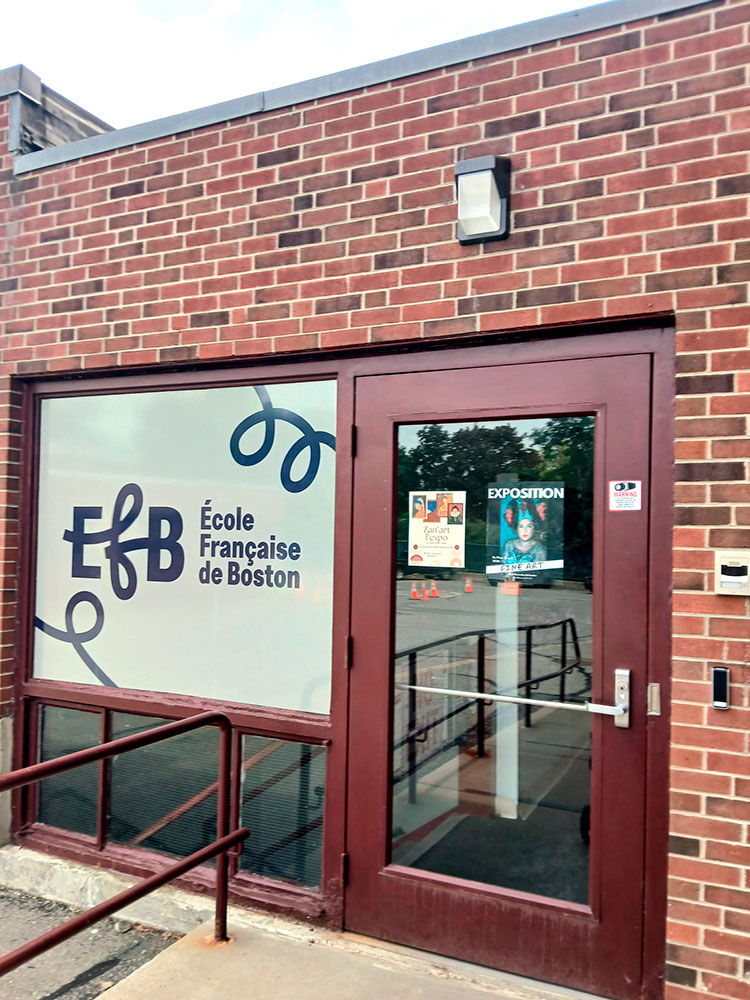
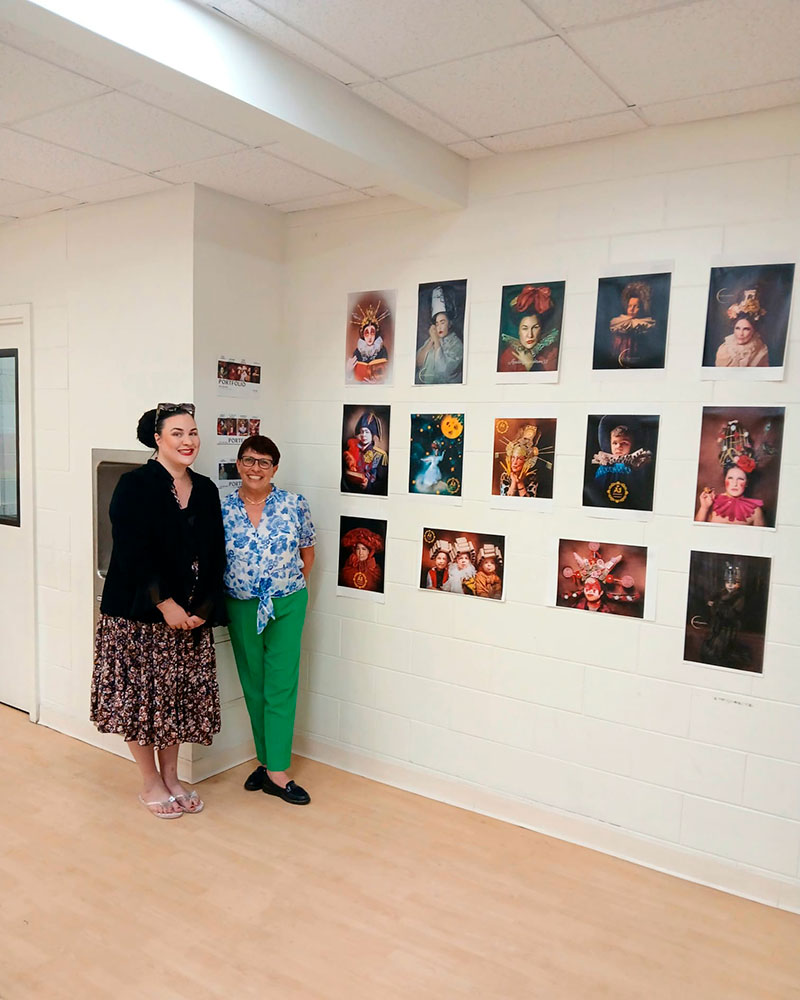
Sacred imagery recurs across the series – saints, iconography, figures of faith. You approach this territory as an artist rather than a believer or a critic. How do you hold that position, and what draws you to sacred forms specifically?
What attracts me to sacred imagery is first of all its beauty. I am fascinated by the visual world connected to religious figures: saints, angels, halos, sacred gestures, monastic life, architecture, clothing and old religious images. In the medieval period and during the Renaissance, religion was deeply present in everyday life, not only as belief, but also through art, buildings, symbols and visual culture.
I approach this territory as an artist, with respect and fascination. I am not trying to make a religious statement or a criticism. I am inspired by the grandeur, silence and mystery of these forms. Sacred imagery gives my characters a timeless presence, almost like forgotten icons. It allows me to bring more depth, dignity and light into the portraits, and to connect human fragility with something more poetic, historical and eternal.